Hay fever is a common condition that impacts up to one in five people at some point in their lives.
As the name suggests, hay fever can be an allergic reaction to grass – but there are other types too. The condition brings on symptoms in response to pollen, so you may experience hay fever if you have an allergy to pollen from any plant, including trees and weeds.
Here, we’ll explore what hay fever is and how it may affect the eyes, throat and skin, plus some of the common ways to stop hay fever symptoms.
What is hay fever?
Hay fever is a condition that arises due to an allergic reaction to pollen – a fine powder released by plants.
The different types of pollen that can cause hay fever symptoms include:
Tree pollen
Grass pollen
Weed pollen
The allergy usually sets in when particles of pollen come into contact with the:
Mouth
Nose
Eyes
Throat
Allergic sensitivity to pollen is what causes hay fever. For some people, when small amounts of pollen come into contact with
these parts of the face, it results in irritation and inflammation . When this happens, the immune system wrongly identifies the pollen as a harmful substance to your body and responds as if the allergen is a virus. Immune system cells called mast cells bind to the pollen, signalling the release of a chemical called histamine into your bloodstream, which causes hay fever symptoms.
However, hay fever is not contagious, and you can’t catch it.
The nature of your hay fever depends on what type of pollen you’re sensitive to. There are about 30 types of pollen that commonly cause hay fever. In the UK, most hay fever sufferers are allergic to grass pollen, but a quarter are sensitive to pollen from trees.
The amount of pollen in the air can also affect whether allergy symptoms develop or not. Hot, dry, windy days are more likely to feature airborne pollen, while cool or damp days tend to wash pollen to the ground.
What are hay fever symptoms?
Hay fever is a common allergic reaction to grass pollen and can present in a variety of ways in different people .. Some people may develop hay fever symptoms only when the grass pollen count is high from May to July – a time known as hay fever season1. Others battle hay fever for much of the year – though the effects are usually worse between late March and September in the UK.
The most common hay fever symptoms include:
Itchy eyes
Sneezing
A runny or blocked nose.
However, the symptoms of hay fever can vary from person to person. Depending on the type of pollen allergy you have and its severity, you might experience:
Red or watery eyes
A itchy throat
A cough
A loss of smell
Blocked sinuses resulting in facial pain
Headache
Earache
Tiredness.
Hay fever symptoms can be cold-like, but unlike a cold – which usually subsides within two weeks – hay fever can occur for longer when you’re in contact with your allergy trigger. Find out more about the differences between allergies and colds.
Tips to help reduce hay fever symptoms

While you’re unlikely to escape pollen completely, there are other things you can do to reduce hay fever symptoms as much as possible during the season when your allergies are strongest.
When the pollen count is high, you might want to consider the following steps and hay fever remedies:
Stay inside
Try to stay indoors where possible to minimise your exposure to pollen. Avoid walking on or cutting grass, especially in the early morning and late evening, and be sure to minimise contact with others if you’re feeling unwell or have a temperature.
If you do want to go out and enjoy the great outdoors, try to spend time away from rural areas. Heading to the coast can help you to escape the pesky plants, as sea breezes can blow pollen in land.
Keep windows and doors closed
This is most important in the mornings and evening when pollen levels peak. Shutting windows and doors can help to keep the pollen outside of your home. Similarly, it’s a good idea to avoid keeping fresh flowers inside and to not dry clothes outside, as they can end up catching pollen.
If you’re still suffering indoors, an air filter such as a HEPA filter (high-efficiency particulate absorbing filter) may be able to help.
Wash when you get home
Pollen can stick to your skin and hair. On high pollen days, showering and washing your hair after arriving home and changing your clothing can help to reduce hay fever symptoms.
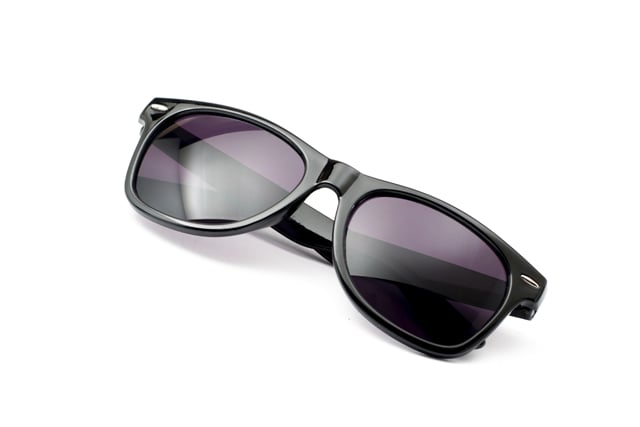
Dress for the weather
Wear wraparound sunglasses and a hat with a large brim. This can help to keep pollen out of your eyes and off your face.
Similarly, when you’re getting ready to go out for the day, you can try putting some Vaseline around your nostrils. This can help to trap the pollen before you breath it in.
Keep your home clean and fresh
Try dusting with a damp cloth and vacuuming regularly to reduce the amount of pollen in your home. Keeping other irritants out may also help relieve your symptoms, so consider not smoking around the house and keeping pets outside, if possible, as they can bring pollen in with them.
Keep track of daily pollen levels
Keeping track of daily pollen using the Benadryl pollen forecast can also help. Mid-morning until afternoon is usually the time of the highest concentration of pollen in the air. Try to avoid being outdoors on particularly windy days when pollen is stirred up and mixed into the air.
If you’re still suffering, you may require medication. Find out more about the allergy treatment options available to you.
Hay fever treatment options
You can’t cure hay fever, but there are ways to manage the condition in the long-term. Various hay fever remedies can reduce the intensity of the allergic symptoms to offer relief.
The different options available to help relieve hay fever symptoms include:
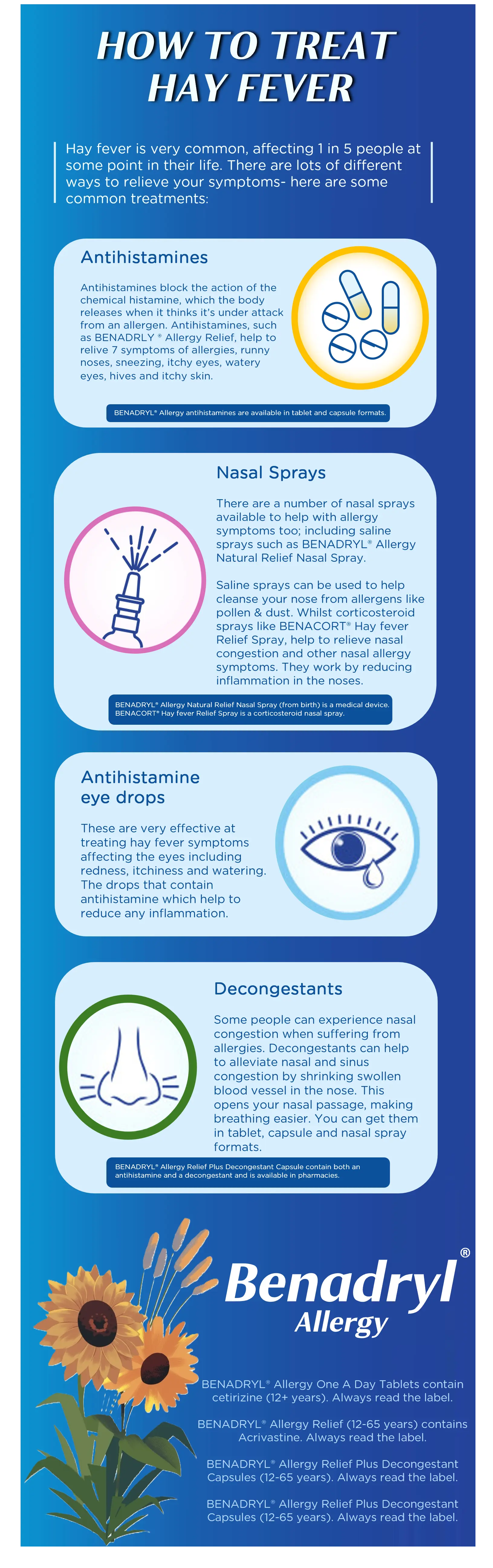
Antihistamines
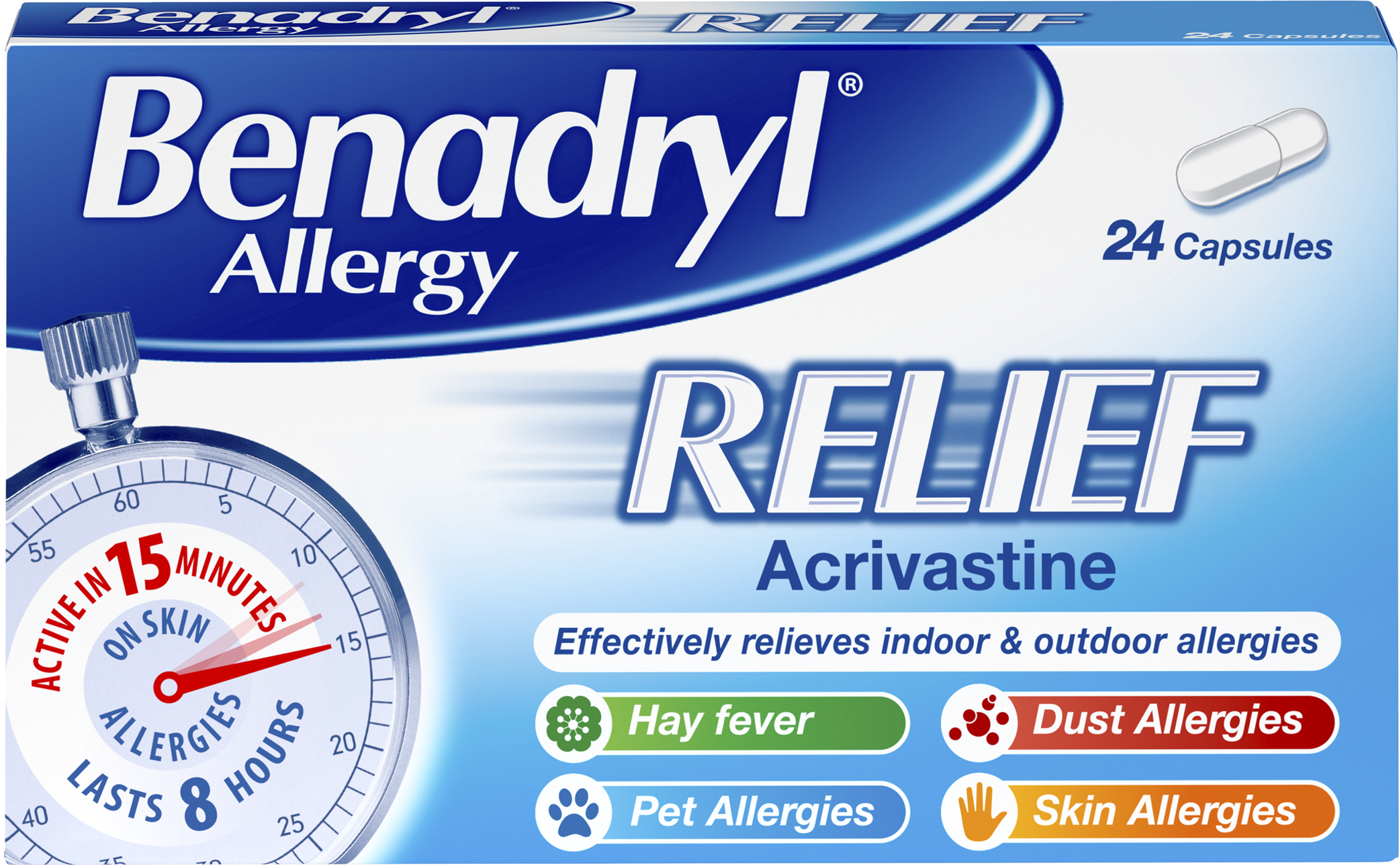
Antihistamines block the action of the chemical histamine, which the body releases when it thinks it’s under attack from an allergen. These are available over the counter or by prescription and can come in the form of tablets, drops and nasal sprays.
This treatment is typically the first line of defence, and antihistamines can come in several types and strengths. For relief from a blocked nose, a nasal spray may help, whereas eyedrops may bring relief to itchy eyes.
Nasal sprays
There are a number of nasal sprays available to help with allergy symptoms, including saline sprays, antihistamine sprays, and corticosteroid sprays. Saline sprays can be used to help cleanse the nose from irritants; antihistamines spray minimises nasal allergy by blocking the effects of histamines. They work by reducing inflammation in the nose.
Just remember that not all nasal sprays are suitable for children, so consult a doctor or pharmacist and always check the dosage recommendations when choosing any treatment for hay fever in children.
Eye drops
These are very effective at treating hay fever symptoms affecting the eyes, including redness, itchiness, and watering. The drops that contain antihistamine, such as azelastine and olopatadine, reduce inflammation.
Decongestants
Some people can experience nasal congestion when suffering from allergies. Decongestants can help to alleviate nasal and sinus congestion by shrinking swollen blood vessels in the nose. This opens up your nasal passage, making breathing easier.
You can get them in tablet, capsule, and nasal spray formats. Benadryl Allergy Relief Plus Decongestant Capsules contain both an antihistamine and a decongestant and is available in pharmacies.